Types of crowns
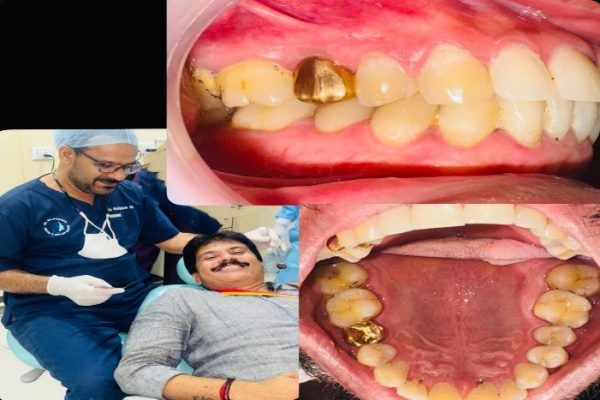
- Metal Crowns: Metal crowns are made of gold, palladium, or other metal alloys. They are extremely strong and durable, making them ideal for back teeth where chewing forces are high, but their metallic color makes them less aesthetic.
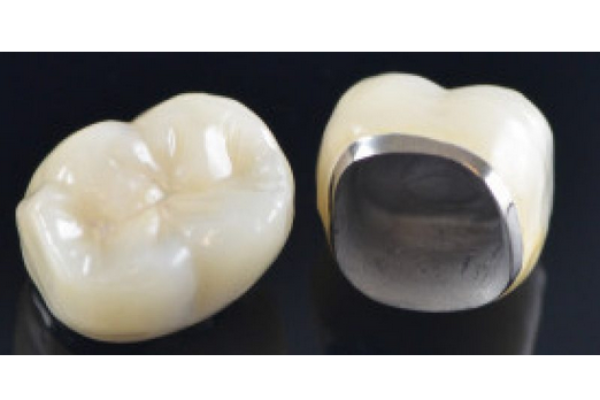
- Porcelain-Fused-to-Metal (PFM): They are Metal base covered with tooth-colored porcelain. They are Durable and natural-looking, suitable for front and back teeth. They can handle moderate biting forces, but the porcelain may chip over time. Sometimes, a thin dark metal line can appear near the gum, which may slightly affect appearance.
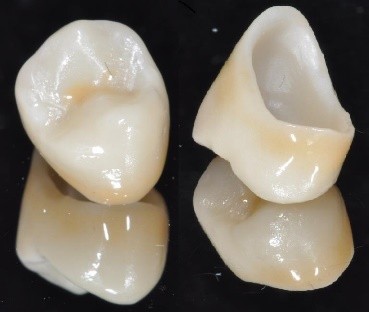
- All-ceramic/porcelain: All-ceramic or porcelain crowns are made entirely of tooth-colored ceramic without metal. They look very natural, making them best for front teeth. They can fix discolored, misshaped, or slightly crooked teeth. However, they are not as strong as metal or PFM crowns and can break under heavy chewing. They are safe and well-tolerated by the gums.
- Zirconia: made from zirconium dioxide, a very strong ceramic material. They offer excellent strength, durability, and high fracture resistance, making them suitable for both front and back teeth. Zirconia crowns are highly aesthetic, biocompatible, meaning they are less likely to cause allergic reactions or irritation. With proper care and regular dental check-ups, this can last 10- 15 years.
Crown Placement Procedure with Timeline
- Tooth Preparation and Scanning (Day 1): The tooth is shaped, and measurements are recorded using scanner.
- Placing a Temporary Crown (Day 1): A temporary crown (mostly for front teeth) is placed to protect the tooth from sensitivity, or damage while the permanent crown is being made.
- Cementing the Permanent Crown (Day 3-4): Once the permanent crown is ready the temporary crown is removed. We check the fit, shape, and color and then cement the permanent crown from proper bite and comfort.
Crown & Bridge FAQs
- Does getting a crown or bridge hurt?
The procedure is done under local anesthesia, so you should not feel pain during treatment. Some temporary sensitivity is normal afterwards. - How do I care for my crown or bridge?
Brush and floss daily, and visit us for regular check-ups and professional cleaning to maintain their longevity. - What if my crown or bridge becomes loose or falls out?
Contact us immediately. A loose or fallen restoration can usually be repaired or recemented